
The Rise of AI in Digital Marketing: How to Stay Ahead of the Curve
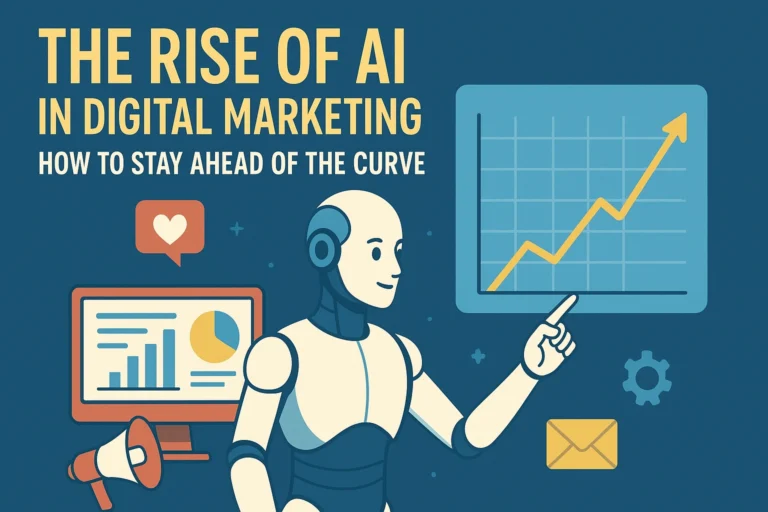
What Is AI in Digital Marketing?
Artificial Intelligence (AI) in digital marketing refers to the use of machine learning, automation, and predictive analytics to improve marketing performance.
It helps businesses:
- Understand consumer behavior
- Automate repetitive tasks
- Personalize experiences
- Optimize marketing campaigns in real-time
Simply put, AI enables marketers to work smarter, not harder.
How AI Is Transforming Digital Marketing
1. Smarter Data Analysis
Marketers deal with tons of data daily — from social media metrics to customer interactions. AI tools like Google Analytics 4, HubSpot, and Salesforce Einstein can process this data to uncover trends, predict customer actions, and recommend the best next steps.
Example:
AI can analyze which types of content drive the most engagement, helping brands focus their energy on what truly works.
2. Personalized Customer Experiences
Personalization has moved beyond just using a customer’s first name in an email.
AI enables hyper-personalization by analyzing user data such as browsing habits, purchase history, and behavior patterns.
Example:
Netflix’s AI-powered recommendation engine suggests shows based on viewing history — a model marketers now apply to eCommerce and content marketing.
3. Content Creation and Optimization
AI tools like ChatGPT, Jasper, and Copy.ai help marketers generate blogs, social media captions, ad copy, and product descriptions — saving time and improving quality.
AI also helps optimize content for SEO, identifying trending keywords and improving readability scores.
Pro Tip: Use AI as a co-pilot, not a replacement — human creativity and strategy still matter most.
4. Predictive Advertising
AI-driven advertising platforms, such as Google Ads Smart Bidding and Meta Advantage+, can analyze massive datasets to predict which users are most likely to convert — and then automatically adjust your bids and placements.
This results in:
- Lower ad spend
- Higher conversion rates
- Smarter targeting
5. Chatbots and Conversational Marketing
AI chatbots are transforming customer service and lead generation.
Tools like Drift, Intercom, and ManyChat provide real-time support, answer FAQs, and qualify leads 24/7.
Example:
A visitor lands on your website, asks about pricing, and receives an instant, personalized response — powered entirely by AI.
6. Voice and Visual Search
Voice assistants (Siri, Alexa, Google Assistant) and visual search (Google Lens, Pinterest Lens) are growing in popularity. AI helps optimize content for these platforms by understanding natural language and image recognition, expanding how users discover your brand.
Benefits of AI in Digital Marketing
1. Improved Efficiency: Automates repetitive tasks and saves time.
2. Better Targeting: Delivers personalized ads and experiences.
3. Higher ROI: Optimizes campaigns for better results.
4. Enhanced Customer Insights: Analyzes data patterns for smarter decisions.
5. 24/7 Engagement: Through AI-powered chatbots and automation.
Challenges of AI in Marketing
While AI offers enormous potential, it’s not without challenges:
1. Data Privacy Concerns: Managing user data responsibly is crucial.
2. Over-Reliance on Automation: Human oversight is still necessary.
3. High Implementation Costs: Some AI tools require investment and training.
4. Bias in Algorithms: AI learns from data — if the data is biased, results can be too.
How to Stay Ahead of the AI Curve
1. Embrace Continuous Learning
Stay updated with AI trends, tools, and case studies. Follow marketing blogs, attend webinars, and experiment with new AI-driven platforms.
2. Combine AI With Human Creativity
AI can generate ideas — but humans provide emotion, storytelling, and context. The best marketers combine AI efficiency with human authenticity.
3. Use AI Ethically
Transparency is key. Inform your audience when content is AI-assisted and ensure data use complies with privacy laws like GDPR and CCPA.
4. Invest in the Right Tools
Adopt tools that align with your business goals — such as:
- Jasper or ChatGPT for content
- HubSpot for marketing automation
- Google Analytics 4 for insights
- Hootsuite AI for social scheduling
5. Focus on Strategy
AI can handle execution — but you still need a clear strategy. Define your goals, audience, and metrics before deploying AI tools.
The Future of AI in Digital Marketing
The future of AI marketing is hyper-personalized, predictive, and immersive.
Technologies like AI-driven video marketing, augmented reality (AR) ads, and voice commerce will soon dominate.
Businesses that adopt AI early and adapt quickly will enjoy:
- Stronger customer loyalty
- Greater efficiency
- A clear competitive advantage
Conclusion
AI is not replacing marketers it’s empowering them.
The brands that thrive in this new era will be the ones that learn how to use AI to amplify creativity, improve decision-making, and deliver personalized experiences at scale.
If you haven’t already embraced AI in your digital marketing strategy, now is the time to start because the future of marketing is intelligent, data-driven, and powered by AI. Combining both ensures the best results Reach out anytime as a Digital Marketing Strategist in Kannur, my services are available 24/7 to help your business thrive online.